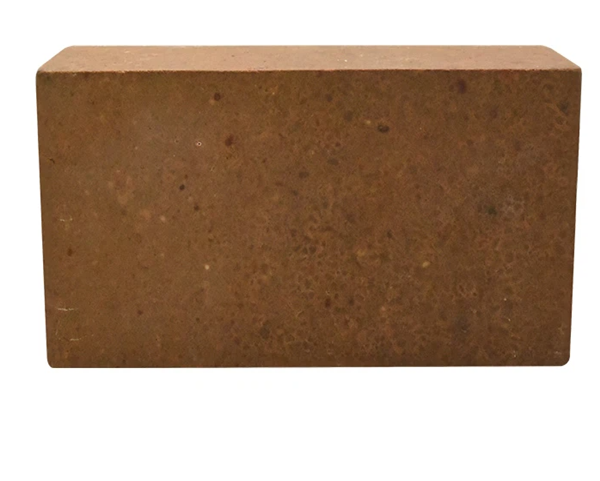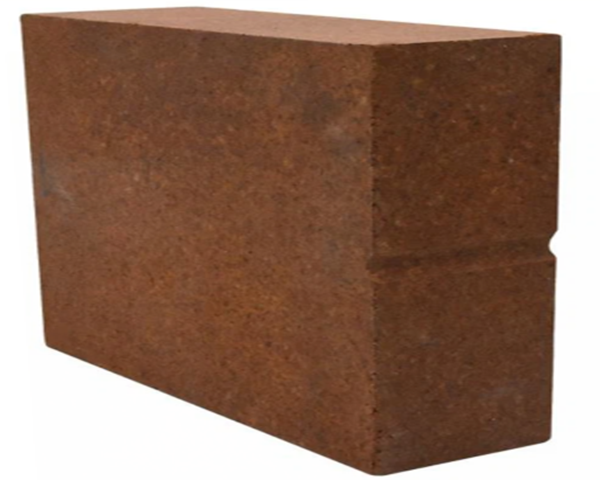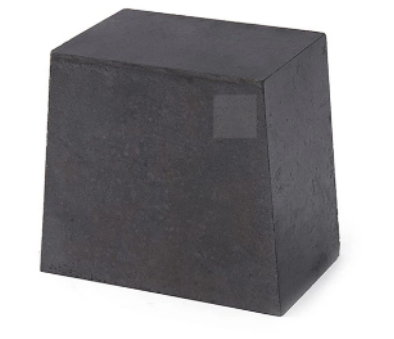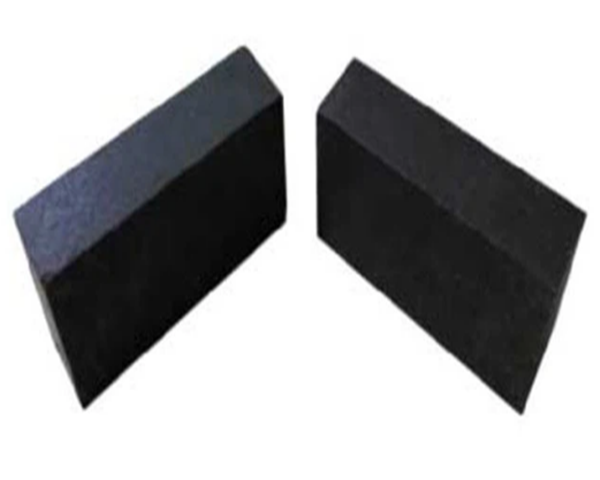
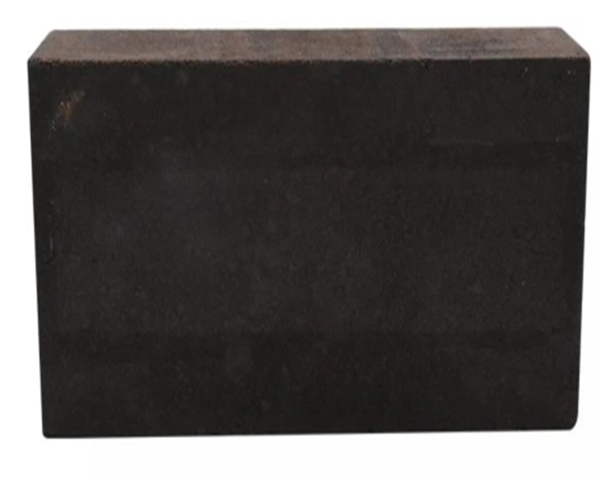
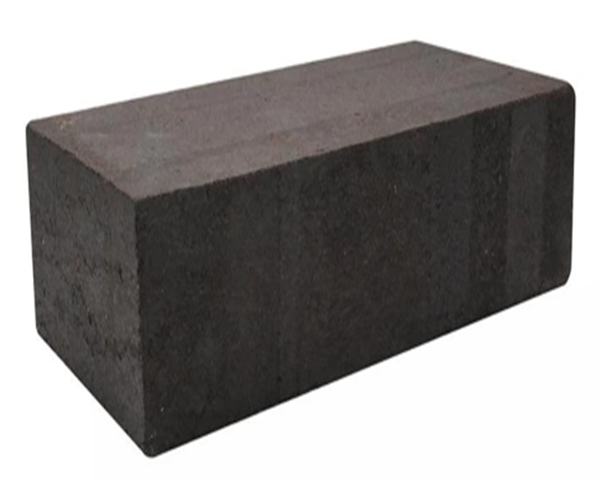
Magnesia-chrome brick is a high-performance refractory material with magnesium oxide (MgO) and chromium trioxide (Cr₂O₃) as its core components, and periclase and spinel as its main mineral phases. This type of product possesses high refractoriness, excellent high-temperature structural strength, and superior resistance to alkaline slag corrosion. It exhibits outstanding thermal stability and also demonstrates good adaptability to acidic slag, making it suitable for high-temperature applications under various operating conditions.
Magnesia-chrome brick is a high-performance refractory material with magnesium oxide (MgO) and chromium trioxide (Cr₂O₃) as its core components, and periclase and spinel as its main mineral phases. This type of product possesses high refractoriness, excellent high-temperature structural strength, and superior resistance to alkaline slag corrosion. It exhibits outstanding thermal stability and also demonstrates good adaptability to acidic slag, making it suitable for high-temperature applications under various operating conditions.
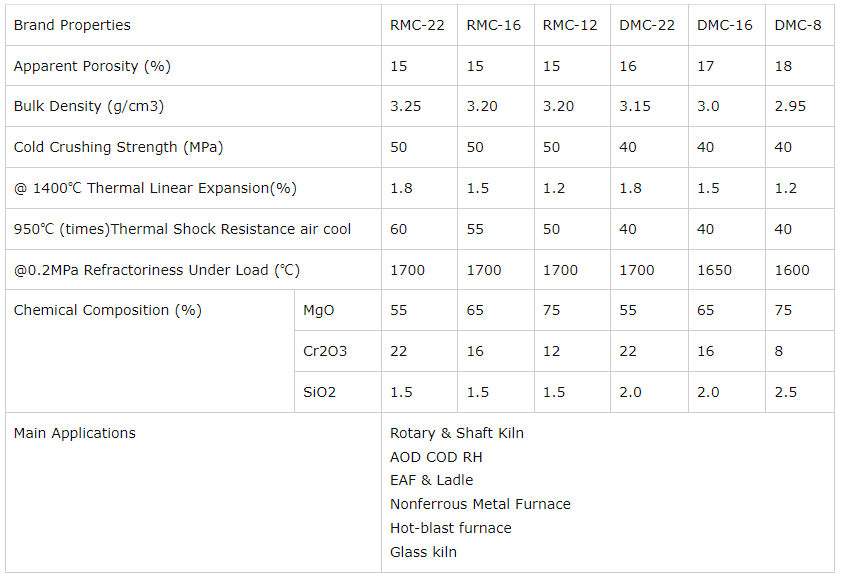
一.Specifications of Magnesia Chrome Brick
二.Classification of Magnesia Chrome Brick
(1) Ordinary Magnesia-Chrome Bricks
These are traditional products, using chrome ore as coarse particles and magnesia as fine powder. Alternatively, both materials are used in graded particle sizes, and the firing temperature is generally 1550-1600℃.
(2) Directly Bonded Magnesia-Chrome Bricks
Directly bonded magnesia-chrome bricks are developed from ordinary magnesia-chrome bricks. Their production characteristics mainly include two points: firstly, the use of purer raw materials, and secondly, the use of higher firing temperatures. The so-called direct bonding refers to the greater direct contact between chrome ore particles and periclase in the brick. Because the amount of SiO2 in the raw materials is low (controlled to below 1%-25%), the amount of silicate generated is small, and high-temperature firing forces the silicate into the corners of the solid-phase particles, thereby improving the direct bonding of the solid phase.
(3)Co-sintered Magnesia-Chrome Bricks
The characteristic of this product's manufacturing process is that a mixture of magnesia and chrome ore fine powder in a certain proportion is fired in a high-temperature furnace to achieve a solid-phase reaction aimed at generating secondary spinel and direct bonding of magnesia and chrome ore, producing a co-sintered material. This material is then used to manufacture fired or chemically bonded products. Co-sintered magnesia-chrome bricks have better direct bonding and microstructural uniformity than directly bonded bricks, with more periclase exsolution phases and intergranular secondary spinel. Co-sintered magnesia-chrome bricks have a series of better properties than directly bonded bricks, especially in terms of high-temperature strength, thermal shock resistance, and slag resistance. Co-sintered bricks can also be divided into two types: firstly, fully co-sintered bricks, where both the particles and fine powder are entirely co-sintered material, and whether fired or chemically bonded, their microstructure is basically similar; secondly, partially co-sintered bricks, where part of the mixture, such as the coarse particles, uses co-sintered material, while the fine powder part can be a mixture of fine chrome ore and magnesia powder in a certain proportion. The fired and chemically bonded products thus have different microstructures.
(4) In the case of re-bonded magnesia-chrome bricks, a mixture of magnesia and chrome ore powder is melted using an electric furnace. Through crystallization from the melt, a raw material with a fairly uniform microstructure, mainly composed of magnesia-chrome spinel and periclase solid solution, is formed. This electrofused magnesia-chrome material is then crushed to a specific particle size, mixed, and molded, followed by firing to produce re-bonded bricks, or it can be used directly as chemically bonded bricks. The microstructural characteristics of re-bonded bricks are a high degree of direct bonding and the presence of a large amount of spinel exsolution phase: the base crystals containing a large amount of exsolution phase fundamentally change the physicochemical properties of periclase, such as reducing the thermal expansion coefficient, improving thermal shock resistance, and improving resistance to acid-alkaline slag corrosion. Re-bonded bricks have properties similar to those of fused-cast bricks, but with better thermal shock resistance and a more uniform microstructure. Re-bonded magnesia-chrome bricks have a fine-grained matrix with uniformly distributed pores and microcracks, making them less sensitive to temperature changes than fused-cast bricks. The high-temperature performance of the product is between that of fused-cast bricks and directly bonded bricks.
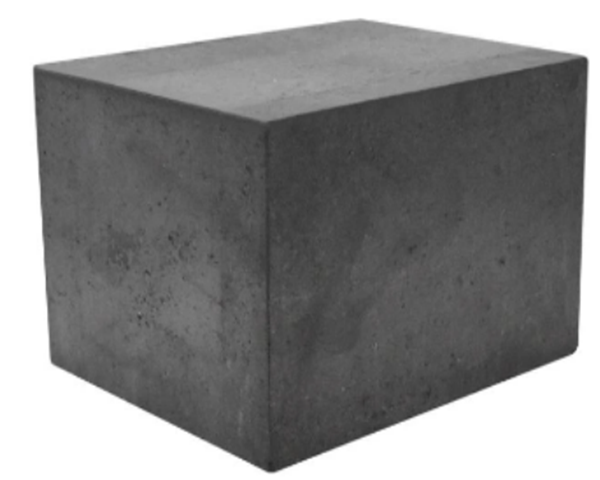
(5) Fused-cast magnesia-chrome bricks: A mixture of magnesia and chrome ore is completely melted in an electric arc furnace, and then the melt is poured into a refractory mold for casting. During solidification, stable periclase and spinel crystalline phases are formed, along with a fine crystalline structure. Therefore, fused-cast magnesia-chrome bricks have excellent high-temperature strength and slag corrosion resistance.
We have recommended some of our Related products to you. I hope you will be interested.