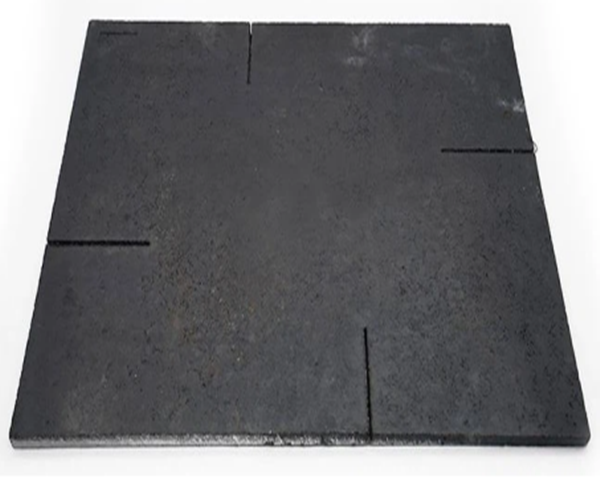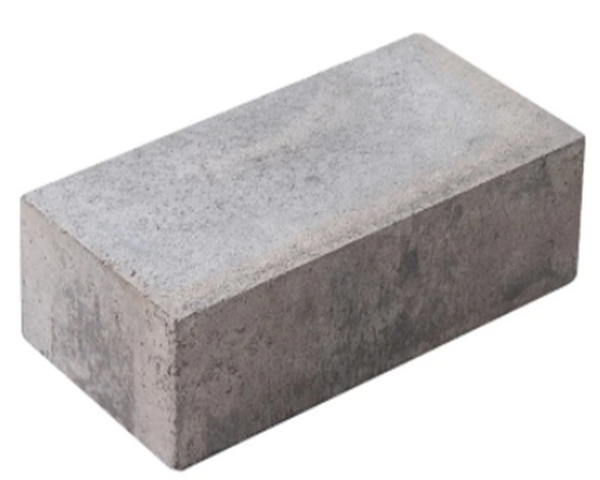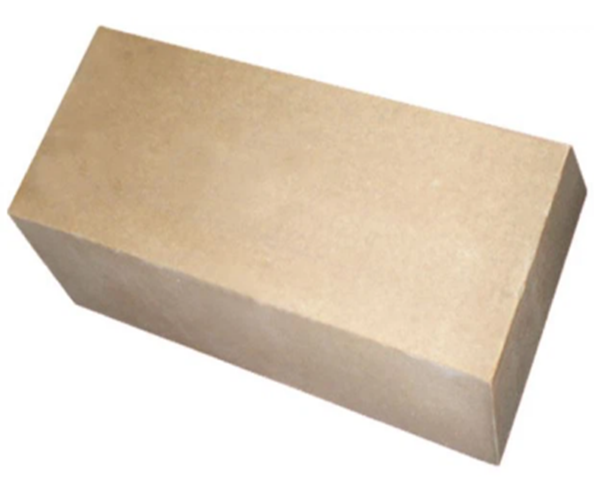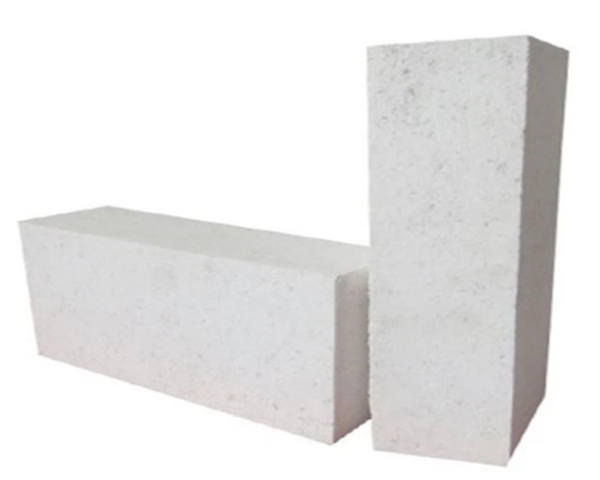
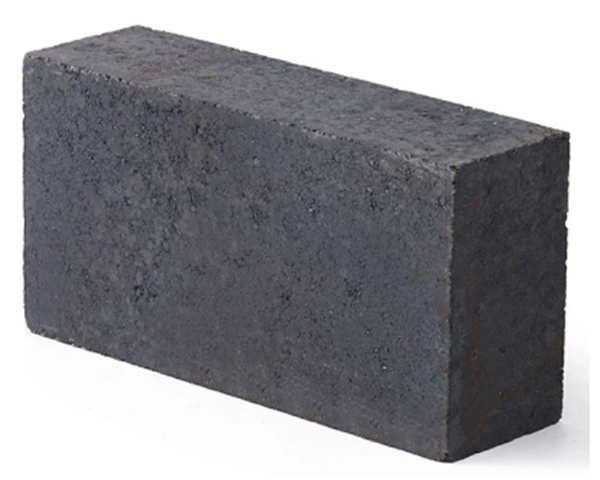
Silicon carbide bricks, with SiC as the main component (content 72%~99%), have a Mohs hardness of 9 and are resistant to acidic slag. They come in various types, including clay-bonded and Si₃N₄-bonded, and are used in non-ferrous metallurgical furnaces, aluminum casting molds, electric furnace linings, and heat exchangers. They are a special type of refractory material with excellent wear resistance and corrosion resistance, suitable for high-temperature furnaces.
Silicon carbide bricks, with SiC as the main component (content 72%~99%), have a Mohs hardness of 9 and are resistant to acidic slag. They come in various types, including clay-bonded and Si₃N₄-bonded, and are used in non-ferrous metallurgical furnaces, aluminum casting molds, electric furnace linings, and heat exchangers. They are a special type of refractory material with excellent wear resistance and corrosion resistance, suitable for high-temperature furnaces.
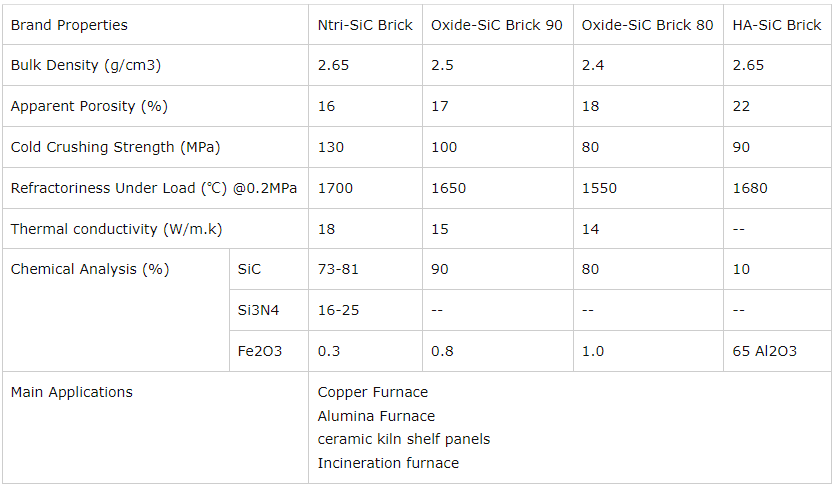
一.Physical And Chemical Indicators of Silicon Carbide Brick
二.Application of Silicon Carbide Brick
1. Non-ferrous metal smelting industry: Utilizing its high temperature resistance, high strength, excellent thermal conductivity, and impact resistance, it is used in indirect heating components such as hard retort distillation furnaces, rectifier furnace trays, aluminum electrolytic cells, copper melting furnace linings, zinc powder furnace arc plates, and thermocouple protection tubes.
2. Steel industry: With its corrosion resistance, thermal shock resistance, and wear resistance, coupled with good thermal conductivity, it is used in large blast furnace linings, effectively extending equipment service life.
3. Metallurgical and mining industry: With a hardness second only to diamond and excellent wear resistance, it is an ideal material for wear-resistant pipes, impellers, pump chambers, cyclone separators, and mine linings.
4. Building materials, ceramics, and grinding wheel industries: Utilizing its high thermal conductivity, it is made into thin-plate kiln furniture, offering the advantages of rapid heat dissipation and high thermal strength, which can improve kiln capacity and product quality, and shorten the ceramic glaze firing cycle. Energy saving field: With outstanding thermal stability, when used in heat exchangers, it can reduce oil consumption by 20%, save fuel by 35%, and increase productivity by 20-30%; when used as a lining for discharge pipes in mining plants, its lifespan can be 6-7 times that of ordinary wear-resistant materials.
三.Silicon Carbide Brick Classification
1. Clay-Bonded Silicon Carbide Bricks
Clay-bonded silicon carbide bricks are refractory products made from silicon carbide as the main raw material and clay as a binder. Silicon carbide bricks are characterized by high thermal conductivity, low thermal expansion coefficient, good thermal shock resistance, and good wear resistance. They are one of the earliest developed types of silicon carbide bricks.
2. Silicon Nitride-Bonded Silicon Carbide Bricks
Silicon nitride-bonded silicon carbide bricks are refractory products sintered by using SiC and Si powder as raw materials through nitridation. They are characterized by Si3N4 as the bonding phase. Si3N4 is an important new type of refractory material in the form of acicular or fibrous crystals between SiC particles.
3. Recrystallized Silicon Carbide Products
Recrystallized silicon carbide products are refractory products in which silicon carbide is directly bonded to silicon carbide. SIC bricks are characterized by the absence of a second phase and consist of 100% α-SiC. The chemical composition of the raw materials used to manufacture recrystallized silicon carbide is as follows: SiC 99.5%, free C 0.2%, Fe 0.08%, free SiO2 0.08%.
We have recommended some of our Related products to you. I hope you will be interested.