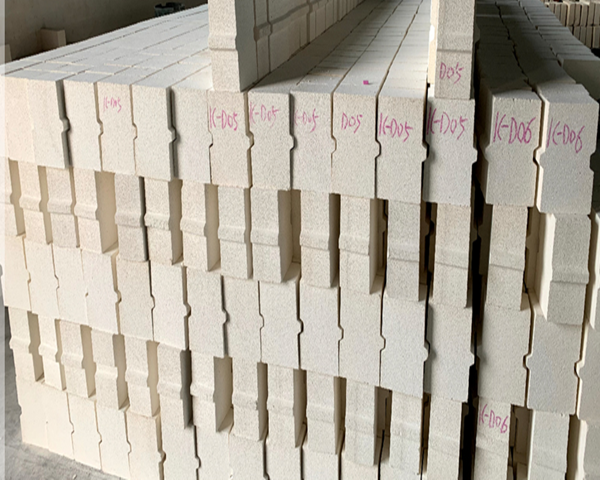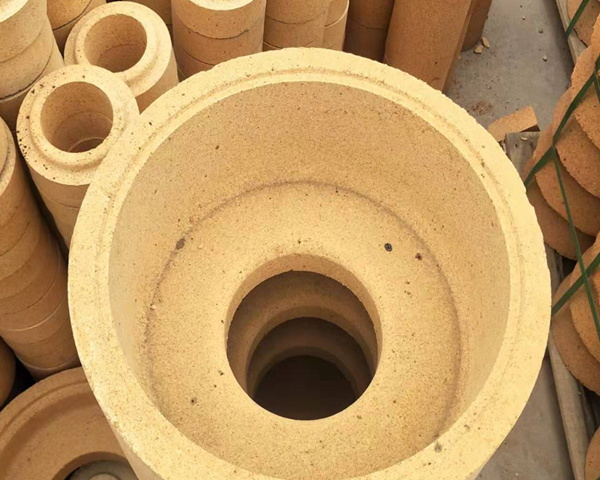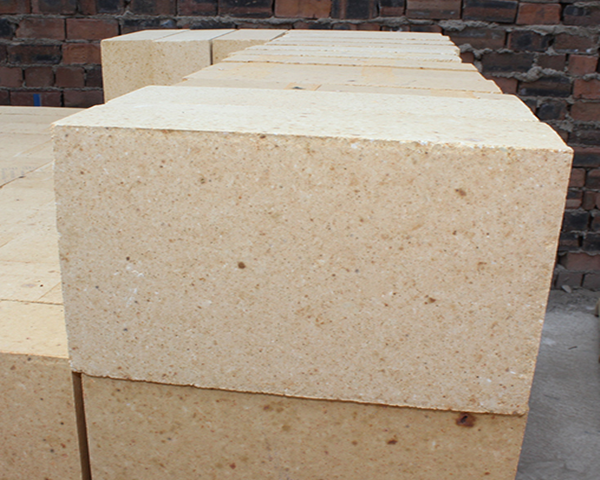
The production process of mullite bricks
Molestone bricks have good thermal shock resistance, are resistant to rapid cooling and heating, and are not easily peeled off. Low creep high aluminum bricks have low creep rates in high-temperature environments, good high-temperature stability, are not easily deformed, and are relatively durable.
The production process of mullite bricks is similar to that of high alumina refractory bricks. Using synthetic mullite clinker as granular material, fine powder as synthetic mullite clinker, or using white corundum, quartz powder, and pure clay to prepare a mixed fine powder equivalent to mullite composition. Mix granular material and fine powder in proportion. The commonly used ratio is: granular material 45% to 55%, fine powder (<0.088mm) 55% to 45%. After uniform mixing, high-pressure molding is carried out. The firing temperature is 1550-1600 ℃. When using electric melting synthesis of mullite clinker as granular material, its firing temperature should be greater than 1700 ℃.
What is thermal shock resistance?
The effect of temperature changes on refractory bricks is called thermal shock or thermal shock. The ability of refractory bricks to resist rapid temperature changes without damage is called the thermal shock resistance or thermal shock stability of refractory bricks, abbreviated as thermal stability. Thermal shock damage is one of the two major causes of damage to refractory bricks, therefore, the thermal shock resistance of refractory bricks is an important property. How to accurately characterize and evaluate the thermal shock resistance of refractory bricks is an important but difficult problem. Although a lot of work has been done, there is still no universally recognized good method. Due to the fact that thermal shock resistance is an important property of refractory bricks, different methods are often used in scientific research and product quality testing to determine the thermal shock resistance of refractory bricks.
Mullite bricks usually contain impurity oxides such as TiO2, Fe2O3, CaO, MgO, K2O, and Na2O. The impurity content in mullite produced from natural materials is higher than that in artificially synthesized materials.