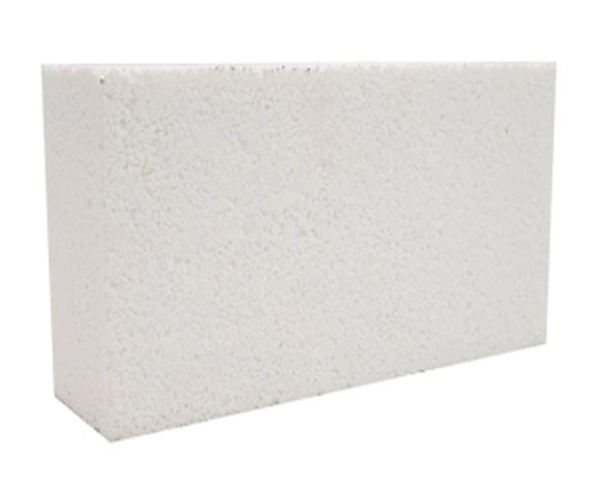
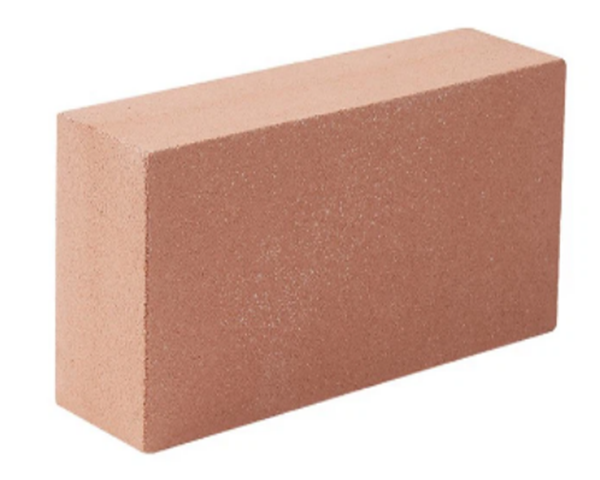
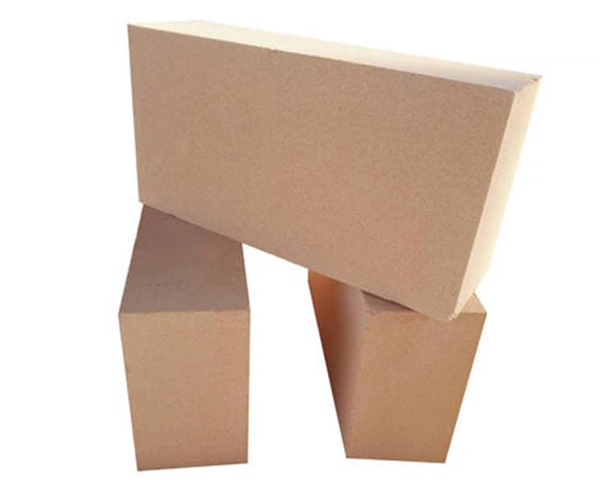
Lightweight fireclay bricks use calcined clay or lightweight aggregate and plastic clay as the main raw materials. They are usually produced using the combustible material method, but the porous structure can also be formed using chemical or foaming methods. The raw materials are mixed with water to form a plastic clay mixture or slurry, which is then shaped by extrusion or casting. After drying, the bricks are fired in an oxidizing atmosphere at 1250–1350°C.
Lightweight fireclay bricks use calcined clay or lightweight aggregate and plastic clay as the main raw materials. They are usually produced using the combustible material method, but the porous structure can also be formed using chemical or foaming methods. The raw materials are mixed with water to form a plastic clay mixture or slurry, which is then shaped by extrusion or casting. After drying, the bricks are fired in an oxidizing atmosphere at 1250–1350°C.
一.Physical And Chemical Indicators of Lightweight fireclay bricks
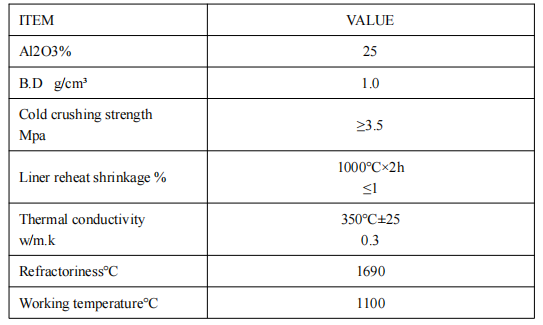
二.The question of the Al2O3 content in lightweight clay insulating bricks is a technical indicator that is not often mentioned. As a refractory material, the performance value of lightweight insulating bricks is reflected in their thermal conductivity and compressive strength during use. These properties effectively reduce heat loss from the heat source, leading to significant energy savings.
Compared to ordinary refractory bricks, lightweight clay insulating bricks are lighter and have a uniform distribution of tiny pores, resulting in a higher porosity. This ensures less heat loss from the furnace wall, leading to lower fuel costs. Lightweight bricks also mean lower heat storage capacity, allowing for faster heating and cooling cycles, thus enabling faster periodic operations.
三.Applications
Lightweight clay insulating bricks are primarily used for thermal insulation, reducing heat loss. They can be used in blast furnaces, hot blast stoves, carbon baking furnaces, carbon calcining furnaces, coke ovens, ladles, casting systems, boilers, cement kilns, glass kilns, and various furnace linings and thermal equipment. They are suitable for metallurgy, machinery, building materials, casting, ceramics, power generation, petroleum, chemical, and other industries.
四.Characteristics of Lightweight Insulating Bricks:
1. Low thermal conductivity, providing excellent thermal insulation;
2. Low heat capacity; due to low thermal conductivity, mullite-based lightweight insulating bricks accumulate very little heat energy, resulting in significant energy savings in intermittent operations;
3. Low impurity content, with very low levels of iron and alkali metal oxides, resulting in high refractoriness; the high aluminum content allows them to maintain good performance in reducing atmospheres;
4. High hot compressive strength;
5. Precise dimensions, accelerating construction speed, reducing the amount of refractory mortar used, ensuring the strength and stability of the masonry, and thus extending the lining life;
6. Can be processed into special shapes to reduce the number of bricks and joints.
We have recommended some of our Related products to you. I hope you will be interested.