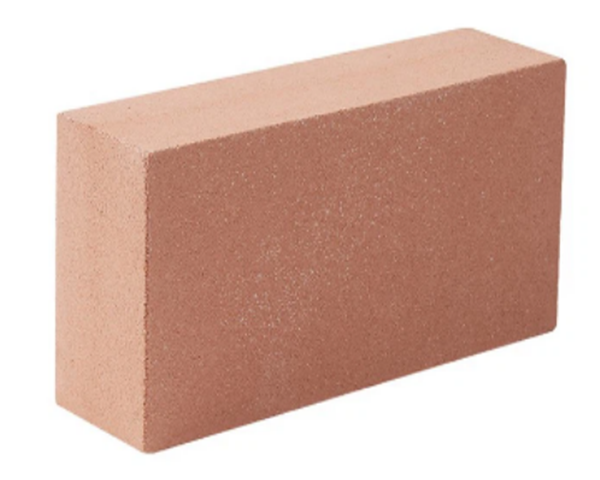
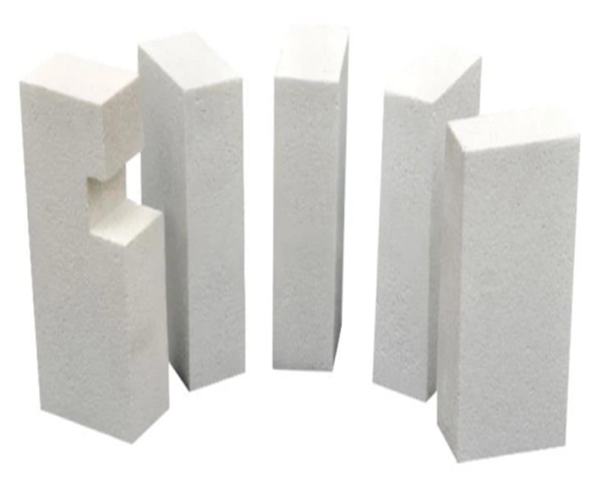
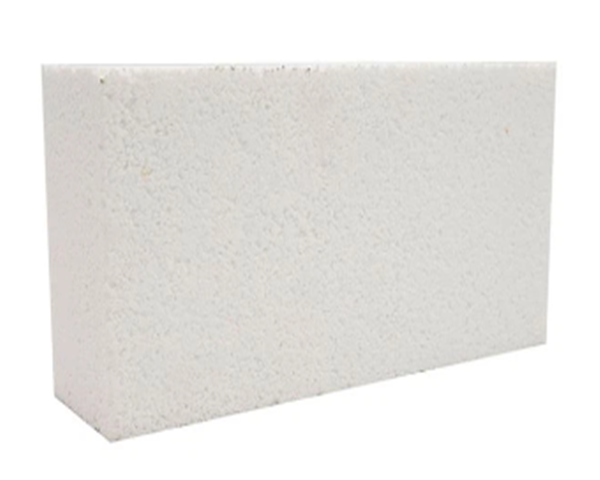
Alumina Bubble Brick, a high-quality lightweight thermal insulation material, is made from high-purity alumina as the core raw material, refined through high-temperature sintering and precision foaming processes. The product has a uniform white appearance and a smooth, delicate surface, possessing multiple excellent properties: it not only offers superior thermal insulation and excellent high-temperature and corrosion resistance, but also boasts significant advantages in terms of lightweight and high strength. Furthermore, it has good processability, allowing for flexible adaptation to various installation requirements. Thanks to its comprehensive performance advantages, this product is widely used in various industries such as metallurgy, chemical engineering, petroleum, and construction, providing reliable thermal insulation solutions for various industrial equipment, building walls, and pipelines.
Alumina Bubble Brick, a high-quality lightweight thermal insulation material, is made from high-purity alumina as the core raw material, refined through high-temperature sintering and precision foaming processes. The product has a uniform white appearance and a smooth, delicate surface, possessing multiple excellent properties: it not only offers superior thermal insulation and excellent high-temperature and corrosion resistance, but also boasts significant advantages in terms of lightweight and high strength. Furthermore, it has good processability, allowing for flexible adaptation to various installation requirements. Thanks to its comprehensive performance advantages, this product is widely used in various industries such as metallurgy, chemical engineering, petroleum, and construction, providing reliable thermal insulation solutions for various industrial equipment, building walls, and pipelines.
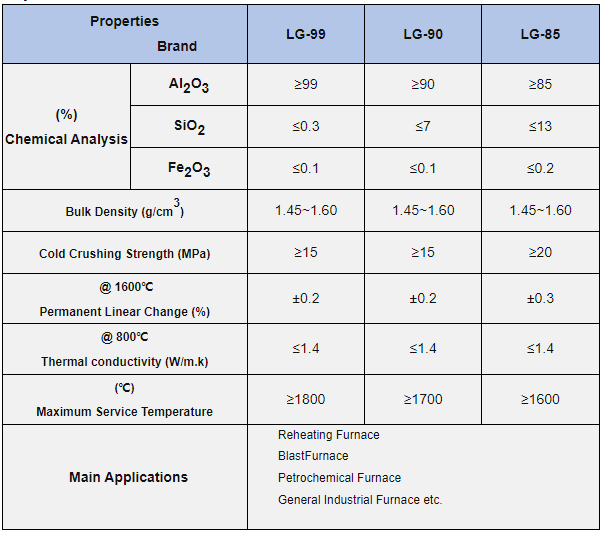
一.Physical And Chemical Indicators of Alumina Bubble Brick
二.Characteristics of Alumina Bubble Brick
1. High-Quality Raw Materials and Advanced Manufacturing Process: Made with high-purity alumina as the core raw material, through high-temperature sintering and precision foaming processes, ensuring strong substrate stability and uniform molding quality, guaranteeing product reliability from the source.
2. Regular Appearance and Outstanding Texture: The overall appearance is uniformly white, with a smooth and delicate surface and no obvious defects. This not only provides a clean visual appearance but also reduces the shedding of impurities during use, making it suitable for environments requiring high levels of cleanliness.
3. Excellent Thermal Insulation Performance: The internal structure forms a uniformly connected porous network with high porosity, effectively blocking heat conduction and convection, resulting in significant thermal insulation and energy savings.
4. High Temperature and Corrosion Resistance: Relying on the inherent properties of alumina material, it can withstand high-temperature environments (suitable for high-temperature working conditions in metallurgy, chemical industry, etc.), and also exhibits good corrosion resistance to various acid and alkali media, ensuring a long service life.
5. Lightweight and High Strength, Excellent Practicality: Compared with traditional insulation bricks, it is lighter, making transportation, handling, and installation easier. It also possesses sufficient structural strength, is not easily damaged, and meets the structural support and usage requirements in practical applications.
6. Flexible Processability: Easy to cut, drill, grind, and other secondary processing, allowing for precise adaptation to the size and shape requirements of different equipment, pipes, and walls, ensuring strong installation adaptability and reducing construction difficulty.
三.Application of Alumina Bubble Brick
1. Metallurgy Industry
Widely used in the lining, furnace walls, and flue sections of steelmaking converters, electric arc furnaces, and non-ferrous metal smelting furnaces as a core thermal insulation material. It efficiently prevents high-temperature heat loss, improves furnace thermal efficiency, reduces furnace weight, and extends furnace service life. It is also suitable for the insulation layers of metallurgical refining equipment and continuous casting crystallizers, as well as the thermal insulation wrapping of high-temperature molten metal transport pipelines, ensuring temperature stability during production and minimizing energy loss.
2. Chemical Industry
Suitable for the thermal insulation needs of high-temperature equipment such as chemical reactors, cracking furnaces, and catalytic devices. Its excellent acid and alkali corrosion resistance prevents equipment from being affected by high-temperature corrosion or heat loss, thus maintaining reaction efficiency. It is also used in the insulation layers of chemical pipelines and storage tanks, especially suitable for high-temperature media transportation and storage in corrosive environments, combining reliable thermal insulation with corrosion resistance to ensure stable equipment operation.
3. Petroleum Industry
Applied to the high-temperature insulation of petroleum refining units (such as distillation towers and catalytic cracking units), and the thermal insulation protection of oil and gas wellhead equipment and pipelines, it can easily handle the complex working conditions of oil fields and refineries. It is also suitable for the internal lining insulation of high-temperature exhaust gas treatment equipment and burners in the petrochemical industry, reducing heat loss, improving energy utilization, and resisting the erosion of corrosive components in the exhaust gas, ensuring long-term stable operation of the equipment.
4. Construction Industry
As a high-end thermal insulation material, it is used in the wall and roof insulation layers of industrial plants and high-temperature workshops, as well as in the thermal insulation and fire separation structures of fire zones. It combines lightweight properties with fire resistance and high-temperature resistance, effectively improving building safety performance. It is also suitable for the insulation needs of special buildings such as kiln workshops, high-temperature laboratories, and auxiliary buildings of metallurgical plants. It can be flexibly cut and processed according to the actual installation scenario, adapting to different building structure requirements, and reducing the building's self-weight load.
We have recommended some of our Related products to you. I hope you will be interested.